This morning on my prayer walk, the Spirit reminded me of a dream He gave years ago and has now asked me to write this blog.
This prophetic dream greatly enriched my understanding of the Messiah and His “appointed times,” long kept and celebrated by the Jewish people. If you have a moment, I believe it may do the same for you, giving you a greater awe of the Lord’s perfect timing—what Scripture calls the Moedim.
I grew up near the small panhandle town of Anton, Texas. In the very center of the community was a circle with City Hall and a park. Back in the 70’s, this city circle was frequently used for festive events like homecoming, weddings, and community gatherings. It was also a favored place to “drag” as a young teenage driver on a Friday or Saturday night.
It was a beautiful place then—lined with large elm trees and well-maintained grass—something that stood out among the tilled cotton fields of that region.
In this dream, I watched prophetically as the Moshiach ben David (Messiah, Son of David) rode a loud Harley-Davidson motorcycle in a repeated circle—seven times—around that very city center in my hometown.
I woke up amazed at the gift of this dream and want to share the insights I believe I’ve been given.

“Ben” means son in Hebrew. The Jewish Scriptures show how sons were often identified through their father. This plays directly into the dream, where I saw Messiah ben David riding a David-son.
In modern culture, we use a first name and surname, but biblically, identity was rooted in lineage. Most of the Christian faith refers to the Messiah as Jesus Christ, but “Christ” is not a last name—it is a title. It comes from the Greek Christos, which is a translation of the Hebrew word messiah, meaning “anointed one.” The Hebrew scriptures even use the term messiah when describing the pagan bloody king of Cyrus in Isaiah 45.
So when we say “Jesus Christ,” we are really saying “Jesus the Anointed One.” It is not a name, but a description.
There is also no letter “J” in Hebrew. Because of this, the name “Jesus Christ” can sound foreign—even un-Jewish—to the Jewish ear. The hard truth, is that this English pronunciation of the name of the Messiah, in many ways, has contributed to a disconnect, or blinding, of the Jews of the past and present. So today, most all of Jewry are still awaiting a Jewish Messiah, one with a Hebrew name from their Hebrew lineage as foretold by the Hebrew Torah and prophets.
However, the expectation of this Messianic figure somewhat becomes divided into two Ben (son) of men.
The Jewish sages have long recognized what appears to be two distinct pictures of the Messiah within Scripture—what they have called Messiah ben Joseph and Messiah ben David. The scriptural contrast and roles of these two anointed “Ben” figures is extremely different and detailed by the name of each father respectfully. These two fatherly types and shadows of the predicted messianic roles are that of Yoseph and David. (remember there is no “J” in Hebrew).
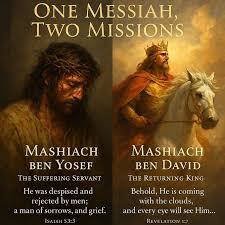
Yoseph is a powerful shadow. He was rejected by his own brothers, sent ahead into Egypt, and became a savior to the nations—yet was not recognized at first by his own family. Perhaps much like America’s Christianity of today, Yoseph became a savior of the regions of greater Egypt but was restricted to second chair below the pharaoh. American churches today seems to be likewise secondly submitted to the state and also content to mix paganism with salvation. But eventually Yoseph does de-paganize himself to reveal his familial association to his own Jewish brethren. Pastor John Hagee once said Yoseph would have dressed and looked like an Egyptian, shaved head and all, and therefore his own brothers did not recognize him. Hagee said it wasn’t until Yoseph revealed his circumcision that they actually believed.
In many ways, this reflects how Messiah first came—unrecognized by many of His own, moving among the nations, and His Jewish identity cloaked in foreign culture. Even when Yoseph stood before his brothers, they did not know him until the appointed moment of revelation.
But there is also the picture of Messiah ben David—a.k.a. David’s Son
This is the Messiah I saw riding the Harley Davidson.
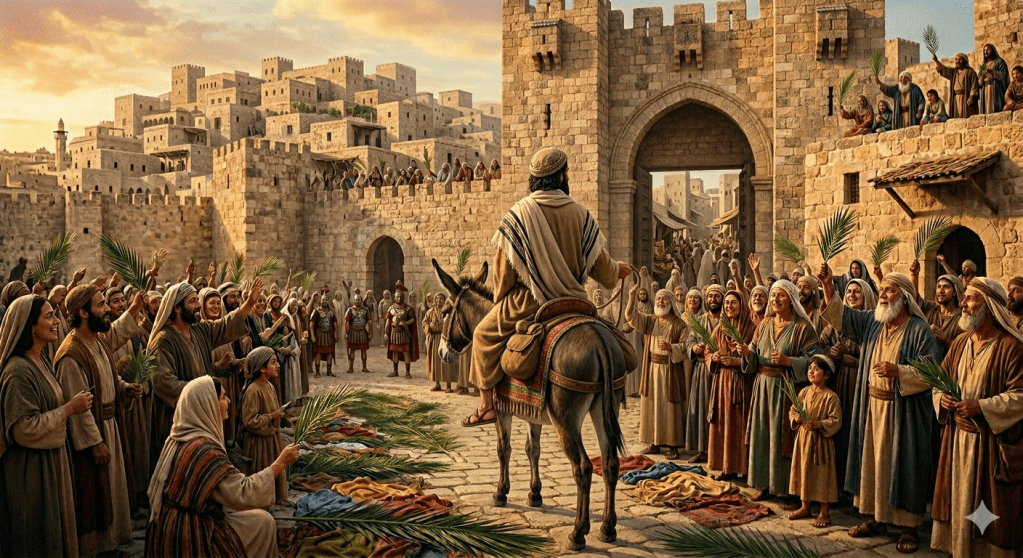
And the parallels struck me deeply. Where Yeshua once entered Jerusalem riding on a donkey—quiet, humble, and largely unreceived in his own home town,—in this dream He was riding a Harley-Davidson. Loud. Bold.
Impossible to ignore.
The meaning of seven and Moedims
The number seven in the dream is not insignificant. He circled the center seven times.
Seven, throughout Scripture, represents completion – divine timing- appointed cycles.
This ties directly to the Moedim.
The Hebrew word moed means an appointed time, a set season. God moved within these rhythms. His timing is not random – it is cyclical, precise, and perfect.
This is the message I believe I am meant to share through this dream and blog: that the appointed time of the Gentiles has come to its fulfillment, and even the roles of the Messiah have shifted.
David’s Son riding a Davidson, doing seven circles around my hometown—which I believe is also symbolic of His hometown, Jerusalem.
An interesting center note: if you look in the center of JerUSAlem, you see the USA. Will America divide the Lord’s hometown in half, as Abraham Accords detail?
Because I have read the Abraham Accords documents, and they outline that the sacred center inside the city—Mount Moriah, the Temple Mount—will be divided, with the eastern part officially surrendered under the term of coexistence for the other Abrahamic faiths.
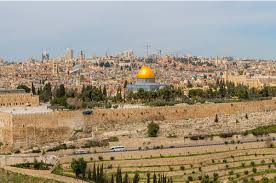
Perhaps this is why I saw the Lord doing circles on a Harley—very loud and disruptive. Perhaps this is the ultimate season-changing event, where and when the meek Messiah becomes the bold Messiah.
The center chapter of the book of Revelation (chapter 11) details the center of Moriah being divided, with part given to the Gentiles. Is this the event meant to bring a major moedim and paradigm shift? Is this the official changing of the seasons—from mercy to judgment, from the time of the Gentiles back to the glory of Israel?
One thing is certain to me through this prophetic dream: Messiah Ben David will not be passive when it comes to His hometown, Jerusalem, at this appointed time in history.
Even if the American church does not want to disrupt or stand up from its second chair of authority to challenge the pharaoh’s peace plan, the Son of David has reserved the right, as defined in Isaiah 34, and will defend that covenant against any people, nation—or dare I say, even groups of evangelical Christian pastors ignorantly supporting the Abrahamic peace Accords.
But let’s back up now and go deeper into the Lord’s appointed times, so we can properly fear—or revere—the moment we are standing on the threshold of today.
The Hebrew word for an appointed season and time is moed. I like to put a “p” in the center of this word and call it “moped,” because it is a cycle, and cyclical in nature. Likewise, it is when and how G-d moves inside the framework of time.
The Jewish faith has long kept the moedim of G-d, and knows and expects His moves to align perfectly with these appointed times and seasons. For this reason, the word moed is known as the appointed times in their respected and expected seasons.
But the only reason the Jewish faith respects and keeps these moedim is because the Lord keeps them—and has biblically commanded us to.
So, as the word itself suggests, allow me to give a bit more “mo-ed” (more education) concerning what these are exactly.
We will start with time, because the moedim are revealed therein. You will also see that all of these moedim carry the pattern of sevens within them.
Weekly Moed: The Little Cycle.
Just like a moped, the weekly moed is a small cycle—but it contains a great ordained move at the end.
Every week contains the ordinary cycle of six days, before the seventh is identified and set apart as sacred—a special ordained day that becomes the Lord’s day. This seventh day is therefore the perfectly timed moed, that special appointed time of each week, which the Creator Himself even celebrated as His own Shabbat during the first week of creation.
If you are not fully celebrating this weekly moed, you are truly missing a special appointed time.
For millennia, the Hebrews around the globe have faithfully observed this weekly moed, beginning on Friday evening and continuing until sunset Saturday.
A great quote that speaks volumes, from a book I once read by the Jewish senator Joe Lieberman:
“More than the Jews have kept the Sabbath, the Sabbath has kept the Jews.”
Annual Moedim
Next, we move into the annual appointed times—specific days within the year that the Torah records as moedim, set apart in their appointed seasons.
These are a step up from the weekly cycle, forming a pattern of seven annual moedim. As the weeks pass, these cycles align in their dedicated times of spring and fall.
As a farmer, I find that these annual moedim carry deep agricultural significance. They align with the two seasons of rainfall biblically known as the former and latter rains.
These seven festivals are therefore divided between spring and fall—between planting and harvest—and the rains connected with each.
The spring festivals begin at the equinox, with the first of the seven: Passover (Pesach in Hebrew).
Pesach
Pesach is the appointed time that the Torah commands to be kept forever, as a remembrance of how greatly Hashem moved on this exact moed to deliver the Hebrews from the captivity of Egypt.
Amazingly, Jewish families have kept this festival faithfully for some 3,000 years. That is true commitment.
And speaking of commitment to Passover, Yeshua also kept this appointed time with His followers, just as the Torah commands.
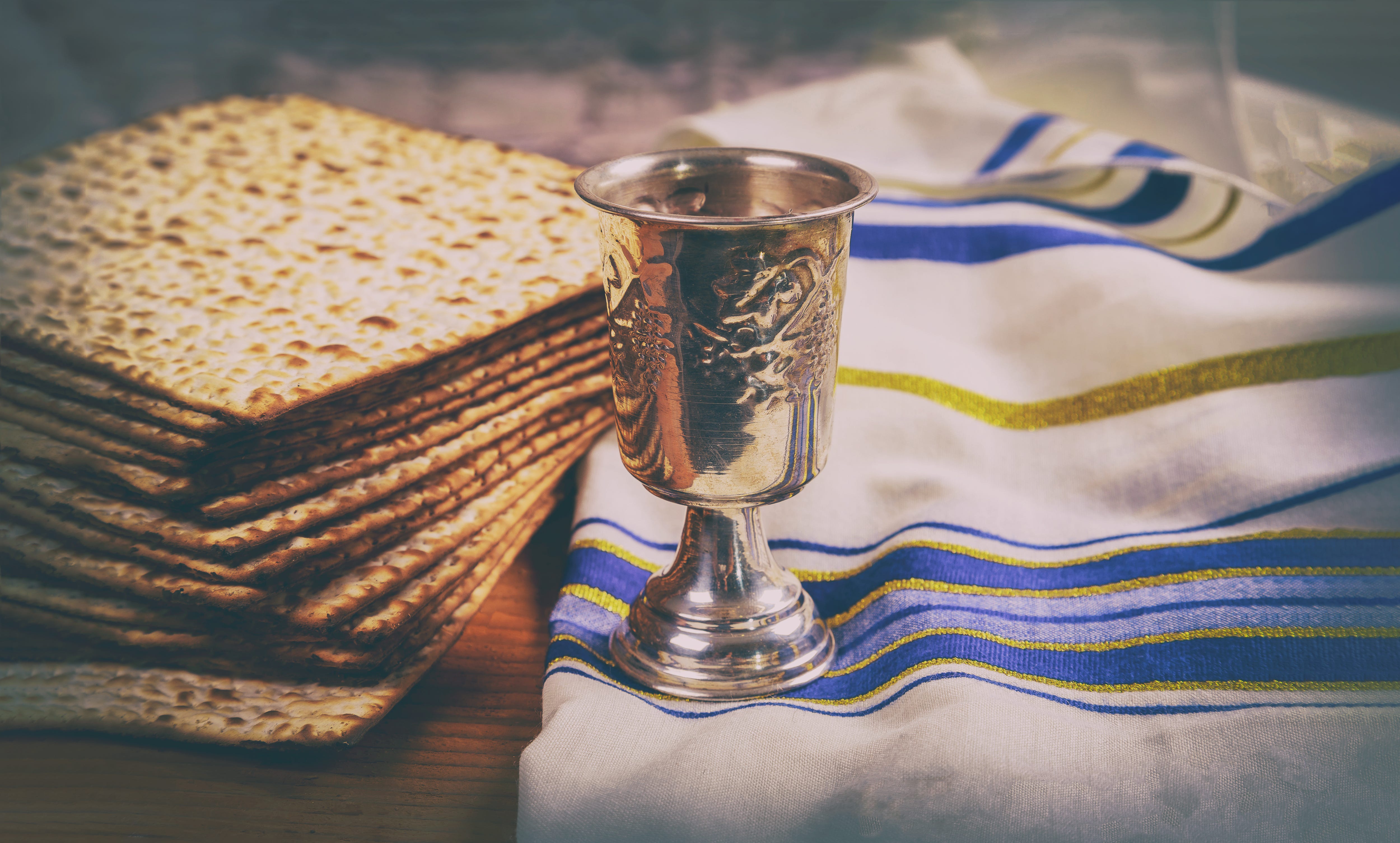
There, in the center of the city of Jerusalem, exactly on the timeline of this first spring moed, Yeshua shared with His friends the four cups of wine of the Seder table, as a Torah-observant Jew.
As He passed the cup of redemption and broke the matzah, Yeshua said,
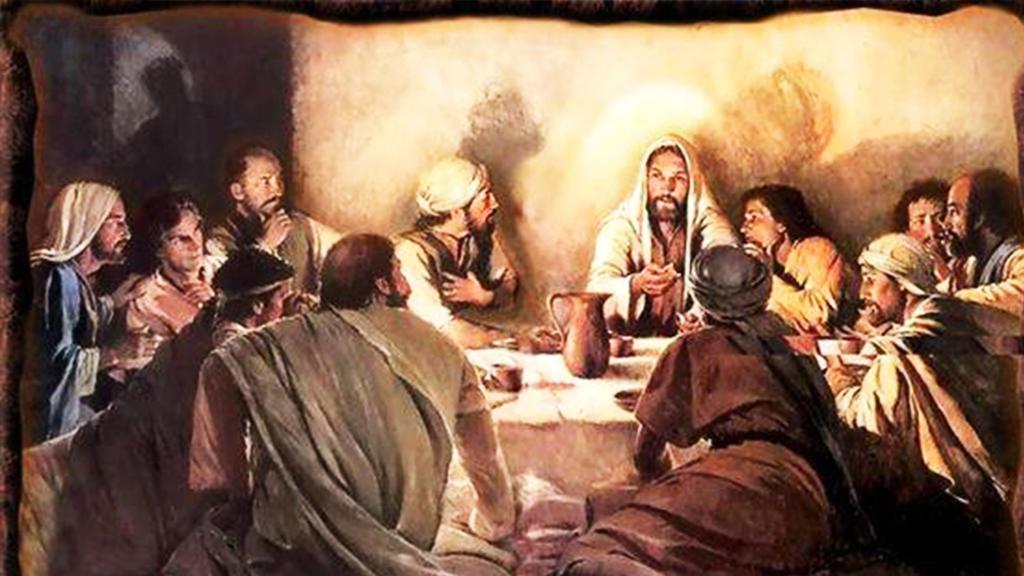
“Take and eat, this is my body broken for you.”
“Take and drink, this is my blood to establish the new covenant.”
As I write this, it is Passover.
Jewish families around the world will be shutting their doors and entering into the appointed time of their celebration. Most still await the final redemption, which Messiah Ben Yoseph quietly instituted two thousand years ago.

Meanwhile, the majority of Christians around the globe prepare for Easter celebrations—with honey hams, egg hunts, and family portraits with the Easter bunny.
I wonder how this makes our Jewish Messiah feel.
It is no wonder that many Torah-observant Jews see the Christian faith as something foreign, even pagan in origin.
I do not mean to be condemning of church leaders who are still celebrating the Lord’s Passover with a blended version of Easter. However, today the information is available, and many are aware of the influences that have crept into the faith.

Those pastors and leaders who cling to tradition rather than truth risk doing a disservice—not only to their congregations, but to the Lord they serve.
Meanwhile, the eyes and ears of Messiah’s own flesh-and-blood family remain distant, often disconnected by these traditions.
Like Passover itself represents, perhaps today is the appointed time to come out from those influences. I cannot help but feel that this dream was not just about symbolism—but about timing.
A shift in season.
From what has been… to what is coming.
Perhaps this is a moment for realignment.
Not out of condemnation—but invitation.
To rediscover the rhythms God Himself established.
To understand the Messiah in His full biblical context.
Even in something as simple as how we refer to Him—Yeshua the Messiah instead of Jesus Christ—we begin to honor the Father’s original design and language.
And perhaps, in doing so, we help remove a layer of distance between the Messiah and His own people.
As we continue in this teaching, I believe it will become clear that this, too, is part of the appointed time.
Hag Pesach Sameach (Have a joyful Passover)!





 Restore Radio
Leave a comment