The Chariot and the Palace
We will continue to see how all the moedim (appointed times and seasons), so perfectly aligned and timed, all work together as the vehicle of the Lord’s movements—both small and large.
Before I continue listing all the biblical moedim, let’s explore more on how the Lord has defined and timed all His movements upon the wheels of these moedim.
Ezekiel had a classical vision of the Almighty, where he saw heaven’s host in glorious movement upon the wheels of these cycles. Instead of a Harley or a moped, the Jewish faith has long defined this well-timed heavenly automobile as the Almighty’s chariot.
But this is no ordinary chariot.
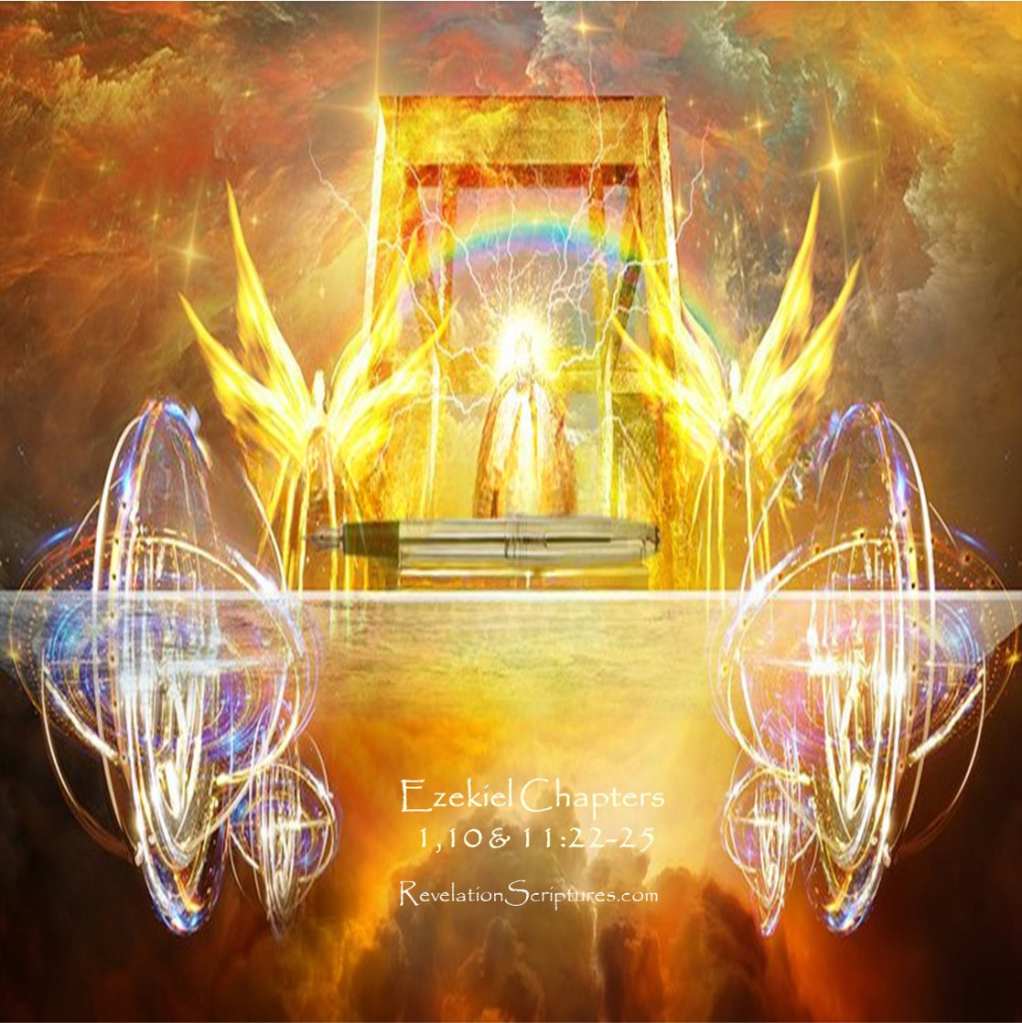
What Ezekiel saw had wheels turning inside wheels—power within power—all of heaven moving in perfect harmony and timing to deliver the Word of the Creator. This well-lubed heavenly chariot of cycles carries the movements of the King of kings—an extraordinary, awesome ride of another dimension.
Ezekiel’s vision of this moedim spinning chariot became a major part of the heart of the Jewish faith, and ironically carried them through the Dark and Middle Ages.
That dark period, beginning in 70 AD, resulted in terrible persecution among the nations of their diaspora (disbursement), much of which had Christian origin and/or influence.
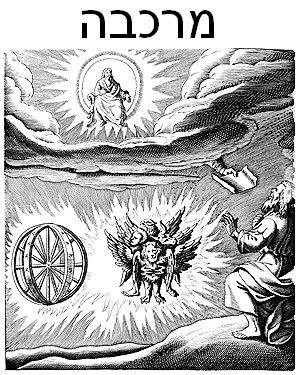
Simultaneously, a new branch of Judaism was being formed—called Merkavah, meaning “chariot of G-d” in Hebrew.
This Merkavah branch arose after the Roman destruction of the Temple, which included the killing of the entire priesthood and millions of Jews faithful to their faith and nation.
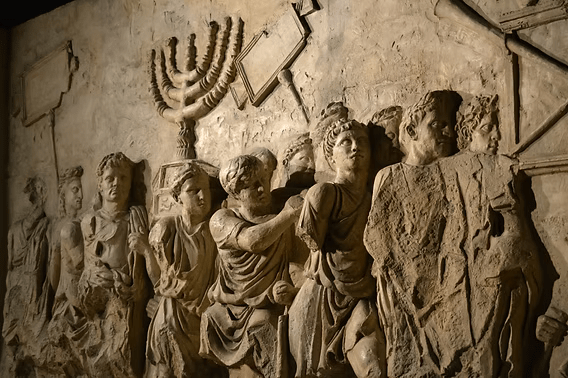
Flavius Josephus recorded that Roman soldiers slew the priesthood upon the sacred altar within the Temple on Mount Moriah, before destroying and looting the Temple complex itself.
Yet a remnant of young Jewish captives were selected—spared only to be taken back to Rome as slaves.
The Remnant and the Spark
Among these young Hebrew captives, there would have been no elder, no rabbi, no priestly sage that survived Rome’s rage.
These survivors had no spiritual guide—other than a small inner spark of hope.
And yet, those sparks came together.
Their hope fixed upon the movement of the Father’s chariot—the moedim cycles seen in Ezekiel’s vision. From this, the branch of Judaism known as Merkavah (the Chariot) was formed.
At the same time, another branch of Judaism emerged: Hekhalot—meaning “the Palace.”
This movement rooted itself in the vision of Isaiah, who saw the Almighty in His heavenly temple (Isaiah 6).
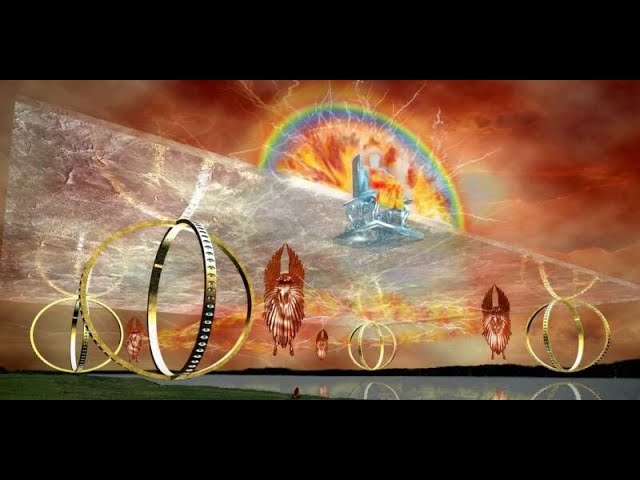
So while one group fixed their hope on the Chariot, another fixed their hope on the Palace.
Effectively, much of modern Judaism traces its roots back to these two streams: Merkavah and Hekhalot.
With the nation defeated, the Temple destroyed, the priesthood gone, and roughly 200 of the 613 commandments no longer applicable, the Jewish faith found itself in a great reset.
In captivity, the remnant placed their hope in the visions of Ezekiel and Isaiah—
the Chariot and the Palace—
movement and dwelling—
timing and presence.
This applied primarily to non-Messianic Jews—those who did not believe Yeshua was the Savior.
Meanwhile, those Jews who did believe in Yeshua had already begun dispersing.
Through the warnings of Yeshua and John the Baptist, many had been told that the system in Israel would fall. They were urged to flee what was coming.
“But when you see Jerusalem surrounded by armies, then know that its desolation is near. Then let those who are in Judea flee to the mountains, let those who are in the midst of her depart, and let not those who are in the country enter her.” Luke 21: 20-21
As a result, many followers relocated north—into regions of modern-day Turkey and throughout the Roman Empire.
Yohann the Revelator: A Witness in Exile
Another Jewish captive during this same timeline received the same visions—of the Palace and the Chariot.
John the Apostle, one of the twelve disciples of Yeshua, was exiled to the island of Patmos by the Roman Empire for proclaiming Yeshua as the Messiah.
Most historians place him there around 95–96 AD.
By that time, John had witnessed the death and resurrection of Yeshua. He even wrote in his own epistle that he was the disciple whom Yeshua loved.
He had gone into the heart of the Gentile world—the Roman Empire—just as he was commissioned.
There, he was arrested repeatedly and even subjected to being boiled alive in oil in an attempt to silence him.
Miraculously, he survived.
He was then exiled to Patmos, likely working in the mines, where—around the age of 95—he recorded his visions of the end of days: what we now call Revelation.
John’s visions of the Almighty mirror those in Isaiah 6 and Ezekiel 1–2—but with even greater detail.
He saw:
- The Palace
- The Throne
- The Chariot movements
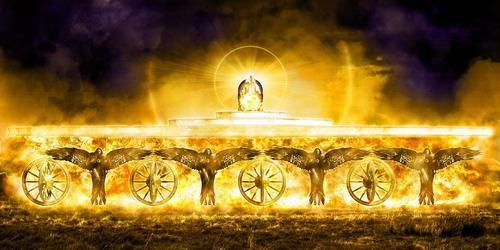
All of which become central at the end of days.
It is striking how these visions align with the same hopes held by the Jewish captives of that era—both Messianic and non-Messianic—who were clinging to the promise of restoration.
The Lowest Point—and the Future Hope
It is important to understand: all Jews of that time—Messianic and non-Messianic—were in captivity, imprisoned, or enslaved.
This was the lowest point in Jewish history.
It also marked the beginning of what the New Testament refers to as “the times of the Gentiles.”
“And they will fall by the edge of the sword, and be led away captive into all nations. And Jerusalem will be trampled by Gentiles until the times of the Gentiles are fulfilled.” Luke 21:24
This period—spanning what some identify as 40 Jubilee cycles (roughly 2,000 years)—is a divinely appointed moedimblock.
And at the beginning of this period, something remarkable happened:
The Jewish soul began to look forward.
To a future moed.
A future restoration.
A future revelation of the Messiah.
Both Isaiah and Ezekiel end their writings pointing toward this restoration of Israel and its final redemption.
And so, the visions of the Chariot and the Palace became anchors of hope.
Merkavah.
Hekhalot.
Movement and dwelling.
Timing and presence.
Hope for restoration—for all Israel.
A Present-Day Turning
By the end of this series, we aim to connect John’s Revelation—the Palace and the Chariots—to a prophetic moedim time of restoration and redemption that is now beginning in our time.
I, too, have had dreams of both the Palace and the Chariots—Hekhalot and Merkavah—which I hope to share as confirmation of how the Lord is moving through these appointed times, both large and small.
I believe John’s visions define a major shift in season at this appointed time.
One of the greatest moedim events the world has ever seen.
And so I say this with confidence:
A major appointed move of the Lord’s heavenly Merkavah is now gearing up—an extraordinary movement of the Almighty.
Even as seen in John’s Revelation, this may be the appointed time when Messiah ben Yoseph shifts into the role of Messiah ben David.
But one of the elders said to me, “Do not weep. Behold, the Lion of the tribe of Judah, the Root of David, has prevailed to open the scroll and to loose its seven seals.”
Revelation 5: 5-6
And I looked, and behold, in the midst of the throne and of the four living creatures, and in the midst of the elders, stood a Lamb as though it had been slain, having seven horns and seven eyes, which are the seven Spirits of God sent out into all the earth.





 Restore Radio
Leave a comment